
Your Tattoo Journey Doesn’t End When You Leave the Studio
Congratulations on your new tattoo.
Whether it’s your very first piece or another chapter in your collection, you’ve just invested in something that’s designed to stay with you for years to come.
Now comes the part many people underestimate.
Healing.
A professionally applied tattoo is only the beginning of the journey. The way you care for your skin over the coming days and weeks plays an important role in how your tattoo settles, how comfortable your healing experience is, and how your artwork looks once it’s fully healed. Proper aftercare helps protect the skin while it heals and reduces the risk of complications.
The good news?
Tattoo aftercare doesn’t have to be complicated.
With the right guidance, a little patience, and consistent care, most tattoos heal beautifully.
This guide has been created to walk you through every stage of the healing journey.
You’ll learn:
* What to expect during each stage of healing.
* What’s completely normal—and what isn’t.
* How to clean and care for your tattoo.
* Common mistakes that can affect healing.
* When it’s time to ask your artist or seek medical advice.
* How to keep your tattoo looking vibrant long after it’s healed.
Remember that every tattoo and every person heals a little differently.
The size of your tattoo, its placement, your skin type, your daily routine, and even your body’s natural healing response can all influence the process. While the surface of a tattoo often looks healed within a few weeks, the deeper layers of skin continue recovering for much longer.
At Woke Tattoo Studio, we don’t see aftercare as a list of rules.
We see it as part of the tattoo experience.
Because every line, every shade, and every detail deserves the opportunity to heal as beautifully as it was created.
Take your time with this guide.
Refer back to it whenever you need reassurance.
And if you’re ever unsure about something during your healing journey, don’t guess.
Reach out to your tattoo artist or, if you’re experiencing symptoms that suggest a possible infection or another medical concern, seek advice from a healthcare professional as soon as possible.
A great tattoo deserves great aftercare.
Let’s make sure yours heals the way it was meant to.
The Four Stages of Tattoo Healing
Every tattoo heals a little differently.
Your age, skin type, tattoo placement, overall health, and how closely you follow your aftercare instructions can all influence the healing process.
Even so, most tattoos follow the same general healing journey.
Understanding these stages can help you feel more confident about what’s normal—and recognise when something may need attention.
Stage 1 — Fresh Tattoo (Days 1–3)
Your tattoo is essentially a fresh wound, so it’s normal to experience:
* Mild redness around the tattoo.
* Slight swelling.
* Tenderness.
* A small amount of clear fluid or plasma.
* Warmth around the area.
Your tattoo may also look incredibly vibrant during these first few days.
That’s completely normal.
Your Focus
* Keep the tattoo clean.
* Follow your artist’s aftercare instructions.
* Avoid touching it unnecessarily.
* Allow your skin to begin healing naturally.
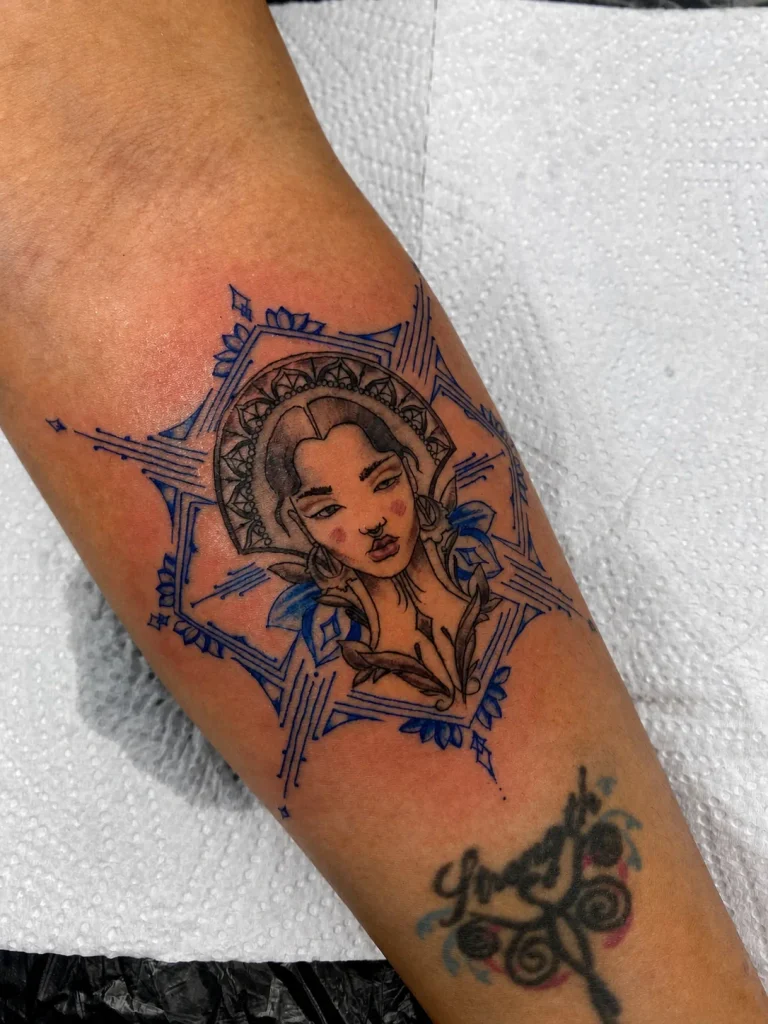
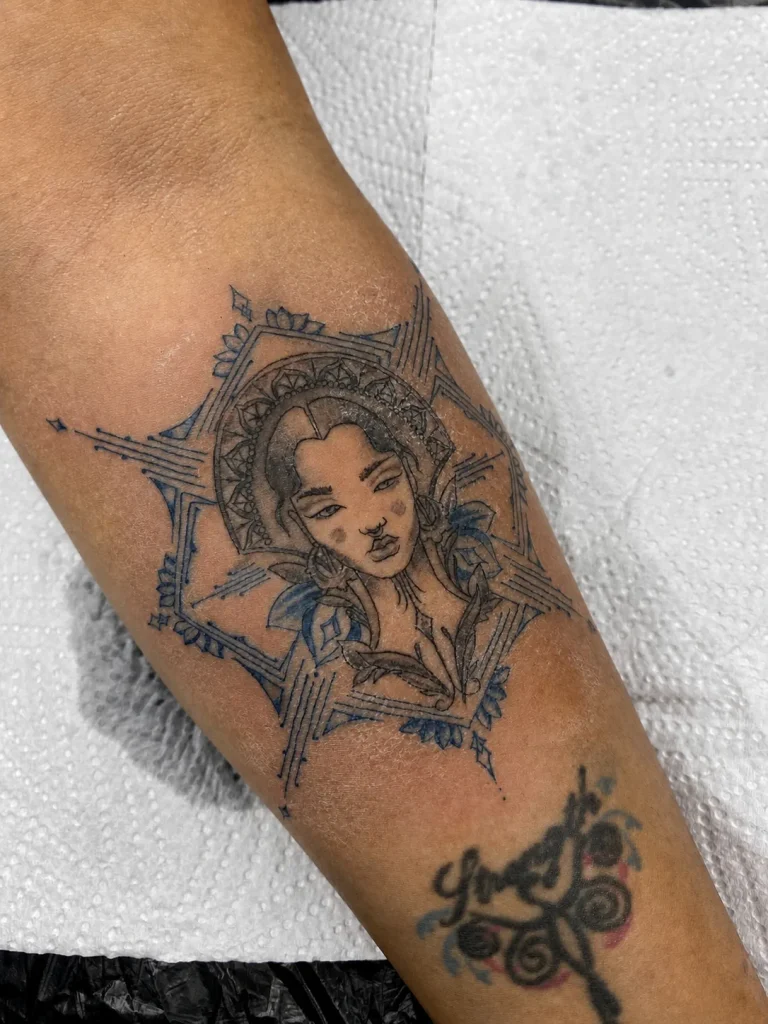
Stage 2 — Peeling & Itching (Days 4–14)
As your skin repairs itself, the outer layer begins to dry and shed.
You may notice:
* Flaking skin.
* Light peeling.
* Itching.
* Tightness.
* A dull or slightly cloudy appearance.
This is often the stage that worries people the most.
In reality, it’s usually a normal part of healing.
Your Focus
* Continue gentle cleaning.
* Moisturise as recommended by your artist.
* Never scratch, pick, or peel the skin yourself.
Removing peeling skin too early can interrupt the natural healing process and may affect the final appearance of the tattoo.
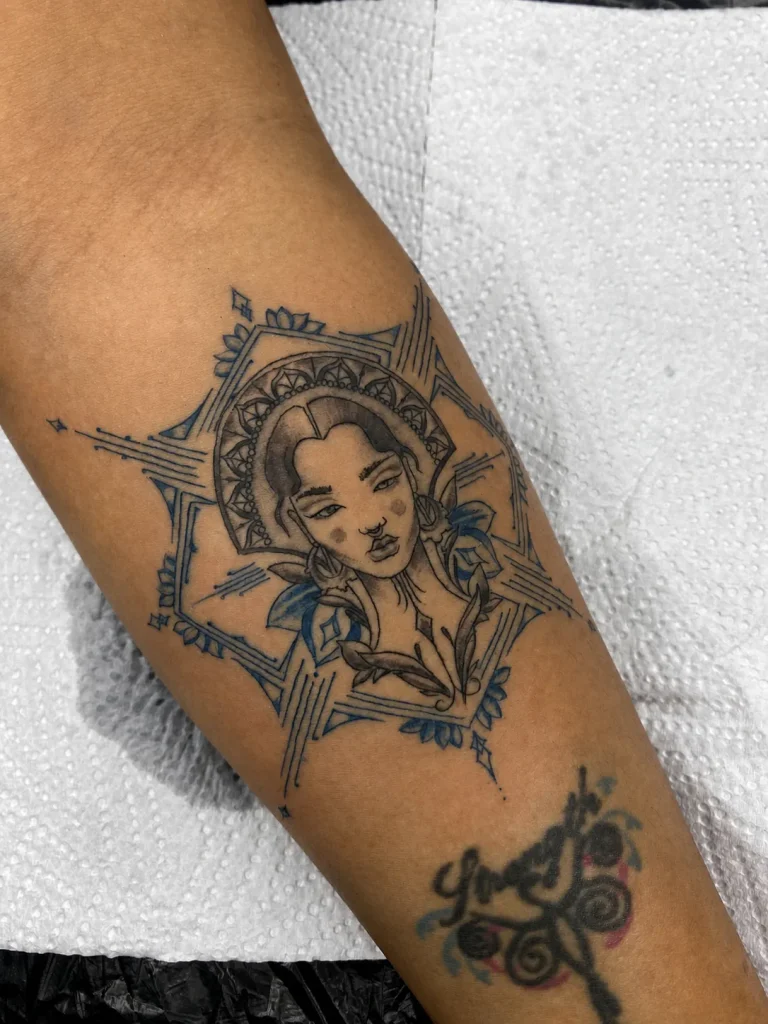
Stage 3 — Settling (Weeks 2–4)
By now, most of the visible peeling has finished.
Your tattoo may begin to:
* Look clearer.
* Feel less sensitive.
* Regain definition.
* Appear smoother.
Some people are surprised that the tattoo still doesn’t look exactly as they expected.
That’s because the deeper layers of skin are still healing, even if the surface appears much better.
Patience is important during this stage.
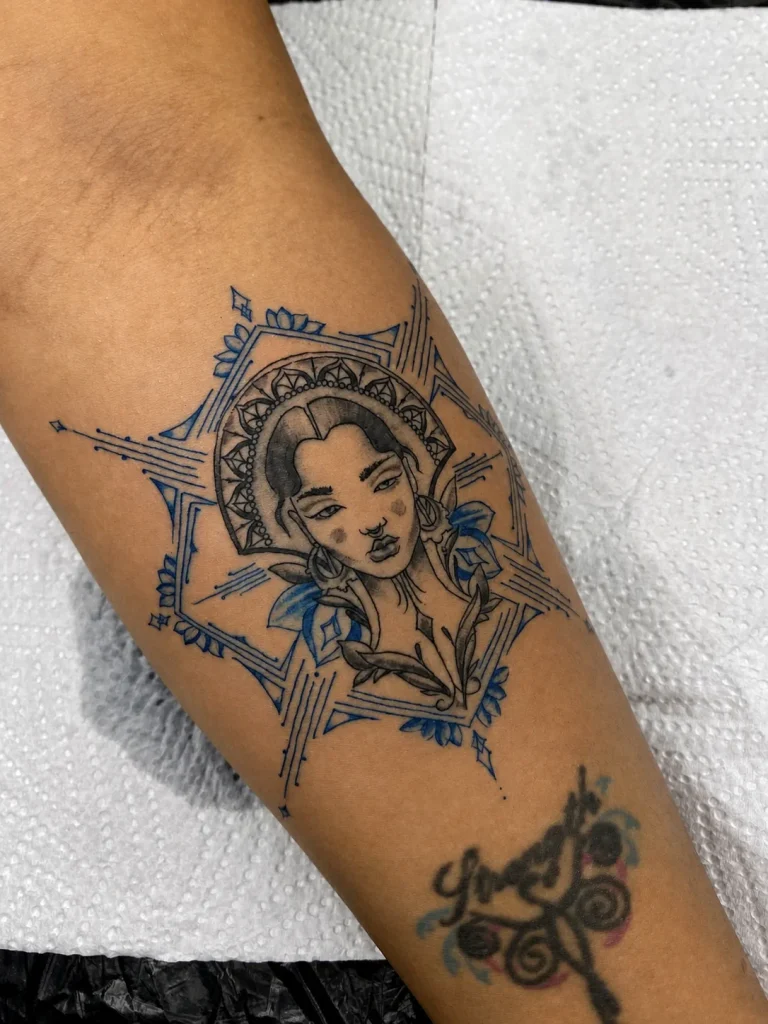
Stage 4 — Fully Healed (Around Weeks 4–8+)
As healing continues, your skin becomes stronger and your tattoo reaches its settled appearance.
You should notice:
* Comfortable skin.
* Vibrant colour and crisp details.
* No peeling or tenderness.
* A natural skin texture.
Keep in mind that larger, heavily shaded, or more complex tattoos may take longer than smaller designs to fully settle.
Even after healing is complete, ongoing skin care—especially protecting your tattoo from excessive sun exposure—helps preserve its appearance over time.
Every Healing Journey Is Unique
Comparing your tattoo to someone else’s can create unnecessary worry.
Healing isn’t a race.
Some tattoos heal faster.
Others simply take a little more time.
The important thing is to focus on consistent aftercare, be patient with your body, and contact your tattoo artist if you’re unsure about anything along the way.
If you notice symptoms such as rapidly spreading redness, severe swelling, increasing pain, fever, or unusual discharge, contact a healthcare professional promptly, as these may indicate a complication that requires medical assessment.
Day-by-Day Tattoo Aftercare
Healing doesn’t happen all at once.
Each stage of the process requires a little patience, consistent care, and realistic expectations.
Use this guide as a general roadmap, but always follow the aftercare instructions given by your tattoo artist, especially if they differ based on the type of dressing or bandage used.
The First Few Hours
Your tattoo artist will apply a protective covering before you leave.
Keep this covering on for the amount of time your artist recommends.
Once it’s time to remove it:
* Wash your hands thoroughly.
* Gently remove the covering.
* Clean the tattoo with lukewarm water and a fragrance-free cleanser if instructed.
* Pat the area dry with a clean paper towel or allow it to air dry.
* Apply any aftercare product recommended by your artist using a thin layer.
Avoid rubbing the tattoo or applying excessive amounts of ointment or lotion.
Days 1–3
Your tattoo is at its most delicate.
You may notice:
* Mild redness.
* Slight swelling.
* Tenderness.
* Small amounts of clear fluid or ink.
Your priorities are simple:
* Keep the tattoo clean.
* Wash only as instructed by your artist.
* Apply aftercare products sparingly if recommended.
* Wear clean, loose-fitting clothing over the area where possible.
* Avoid unnecessary touching.
Days 4–7
This is when healing starts to become more noticeable.
Your tattoo may begin to:
* Peel.
* Feel tight.
* Become itchy.
Although it can be tempting, don’t scratch or pick at peeling skin.
Instead:
* Continue your cleaning routine.
* Keep the skin comfortably moisturised as advised.
* Let peeling happen naturally.
Week 2
Most of the visible peeling should now be settling down.
Your tattoo may still appear slightly dull or cloudy.
This is normal.
Continue caring for your tattoo consistently, even if it already looks much better.
The deeper layers of skin are still healing.
Weeks 3–4
By now, your tattoo should feel far more comfortable.
The surface of the skin often appears healed, but the healing process continues beneath the surface.
Keep protecting your tattoo by:
* Avoiding unnecessary friction.
* Following your artist’s guidance about returning to activities such as swimming if you’ve been waiting.
* Keeping your skin hydrated.
Long-Term Care
Even after your tattoo has healed, looking after your skin helps preserve the quality of your artwork.
Healthy skin supports vibrant tattoos.
For long-term care:
* Moisturise your skin regularly.
* Protect your tattoo from excessive sun exposure with sunscreen once it has fully healed.
* Maintain good overall skin health.
A little ongoing care can help your tattoo look its best for years to come.
—
Remember
Healing isn’t about doing everything perfectly.
It’s about being consistent.
If you’re ever unsure about your tattoo, don’t rely on social media comments or internet myths.
Contact your tattoo artist for advice.
And if you develop symptoms such as worsening pain, spreading redness, fever, or unusual discharge, seek prompt medical assessment, as these can be signs of infection.
Your tattoo tells your story.
Looking after it is simply the next chapter.
What to Expect During Healing
No two tattoos heal exactly the same.
The size of your tattoo, its placement, your skin type, and your body’s natural healing response all play a role in what you’ll experience.
Even so, there are several changes that are completely normal while your tattoo heals.
Knowing what to expect can make the healing journey far less stressful.
—
Redness
It’s common for a new tattoo to appear red around the edges during the first few days.
This redness should gradually improve as your skin begins to recover.
If the redness becomes darker, spreads well beyond the tattoo, or continues getting worse instead of better, it’s worth contacting your tattoo artist or a healthcare professional for advice.
—
Mild Swelling
Some swelling is a normal response to tattooing, especially on larger pieces or areas that move frequently.
The swelling should slowly reduce over the first few days.
Keeping the area protected and following your aftercare instructions can help support the healing process.
—
Clear Fluid or Plasma
During the first day or two, you may notice small amounts of clear or slightly pink fluid.
This is a normal part of your body’s healing response and is not usually a cause for concern.
—
Peeling
Perhaps the most common reason people worry.
A healing tattoo often begins to peel after several days.
The peeling skin may look like tiny flakes or thin pieces of dry skin.
Although it can seem like the tattoo is fading, the ink isn’t peeling away.
Your body is simply shedding damaged surface skin as it heals.
—
Itching
As new skin forms, itching is extremely common.
It can range from mild to surprisingly intense.
As tempting as it may be, avoid scratching the tattoo.
Instead, continue following your aftercare routine and keep your skin comfortably moisturised as recommended by your artist.
—
Tight or Dry Skin
Many people describe their healing tattoo as feeling tight.
This usually happens because the skin is repairing itself.
Keeping the skin appropriately moisturised can improve comfort, but avoid applying excessive amounts of product.
—
A Dull or Cloudy Appearance
Some clients become concerned when their tattoo suddenly looks less vibrant than it did on the first day.
This is completely normal.
As fresh skin forms over the tattoo, it can temporarily make the artwork appear cloudy or slightly faded.
As healing progresses, the tattoo’s clarity gradually returns.
—
Every Tattoo Has Its Own Timeline
Try not to compare your healing journey with someone else’s.
A small fine-line tattoo may heal differently from a large colour sleeve.
Different areas of the body can also heal at different speeds.
The most important thing is consistency.
Follow your artist’s advice, be patient with your body, and remember that healing is a process—not a race.
If at any stage something doesn’t feel right, or your symptoms seem to be worsening rather than improving, contact your tattoo artist. If you develop severe pain, spreading redness, pus, fever, or other signs of infection, seek medical assessment promptly.
Warning Signs You Shouldn’t Ignore !
The vast majority of professionally applied tattoos heal without serious complications when proper aftercare is followed.
However, healing doesn’t always go exactly as expected.
Knowing when to ask for advice can help protect both your health and your tattoo.
If something doesn’t feel right, trust your instincts.
It’s always better to ask a question early than to wait and hope the problem goes away.
—
When to Contact Your Tattoo Artist
Your tattoo artist should usually be your first point of contact if you notice changes that you’re unsure about during the normal healing process.
Reach out if:
* You’re unsure whether your tattoo is healing normally.
* You have questions about your aftercare routine.
* Your tattoo seems more irritated than expected.
* You’re worried about excessive peeling or dryness.
* You’re uncertain about when it’s safe to return to activities such as swimming or exercising.
An experienced artist can often reassure you about normal healing or recommend that you seek medical care if your symptoms suggest something more serious.
—
When to Seek Medical Attention
Some symptoms should be assessed by a healthcare professional rather than managed at home.
Seek medical advice promptly if you notice:
* Redness that spreads or becomes darker instead of improving.
* Swelling that becomes more severe after the first few days.
* Pain that continues to worsen instead of gradually easing.
* Thick yellow, green, or foul-smelling discharge.
* Fever or chills.
* Red streaks spreading away from the tattoo.
* Open sores or skin that appears to be breaking down instead of healing.
These symptoms can sometimes indicate an infection or another complication that may require medical treatment. Early assessment can help reduce the risk of more serious problems.
—
Don’t Try to Diagnose Yourself Online
The internet can be helpful for learning about tattoo healing, but photos and personal experiences shared online don’t always reflect your situation.
Two tattoos can look similar while requiring completely different advice.
If you’re ever unsure:
* Contact your tattoo artist.
* Follow the advice of a qualified healthcare professional if medical symptoms develop.
* Avoid relying solely on social media comments or internet forums for diagnosis.
—
Looking After Yourself Is Looking After Your Tattoo
Seeking advice doesn’t mean you’ve done something wrong.
Sometimes complications happen even when you’ve followed every aftercare instruction perfectly.
The most important thing is responding early if something seems unusual.
A healthy recovery gives your tattoo the best opportunity to heal beautifully—and gives you peace of mind throughout the process.
10 Common Tattoo Aftercare Mistakes (And How to Avoid Them)
Most tattoos heal beautifully.
The key is consistency.
Many healing problems happen not because someone ignores their tattoo, but because they unknowingly follow outdated advice or internet myths.
Here are some of the most common mistakes—and what to do instead.
—
1. Picking or Peeling the Skin
As tempting as it can be, never pull away peeling skin or scabs.
Let them come away naturally.
Picking can interrupt the healing process and may affect the final appearance of your tattoo.
—
2. Scratching an Itchy Tattoo
Itching is a normal part of healing.
Instead of scratching, follow your aftercare routine and keep the skin comfortably moisturised if your artist has recommended it.
—
3. Using Too Much Aftercare Product
More isn’t always better.
Applying a very thick layer of ointment or lotion can leave the skin feeling overly greasy and may interfere with normal healing.
A thin layer is generally all that’s needed, following your artist’s instructions.
—
4. Forgetting to Wash Your Hands
Always wash your hands before touching or cleaning your tattoo.
Fresh tattoos are healing wounds, and clean hands help reduce the chance of introducing bacteria.
—
5. Swimming Too Soon
Pools, hot tubs, lakes, rivers, and the ocean can expose a healing tattoo to bacteria and prolonged moisture.
Wait until your tattoo has healed sufficiently and your artist says it’s safe before swimming.
—
6. Too Much Sun Exposure
Fresh tattoos are especially sensitive to UV exposure.
Keep healing tattoos out of direct sunlight where possible, and once fully healed, use sunscreen to help preserve the colour and detail.
—
7. Wearing Tight Clothing
Tight clothing can rub against a healing tattoo and cause unnecessary irritation.
Loose, breathable clothing is often the more comfortable choice during the early healing stages.
—
8. Ignoring Your Artist’s Advice
Your tattoo artist understands how your tattoo was applied and can tailor aftercare advice to your specific situation.
General advice online can be useful, but your artist’s instructions should always take priority.
—
9. Comparing Your Healing to Someone Else’s
Everyone heals differently.
A friend’s tattoo—or even another tattoo on your own body—may heal at a different pace.
Focus on your own progress rather than comparing timelines.
—
10. Believing Every Internet Myth
Social media is full of tattoo advice, but not all of it is accurate.
If you’re unsure about something you’ve seen online, ask your tattoo artist before trying it.
Getting reliable advice early is far better than trying to correct a mistake later.
—
Small Habits Make a Big Difference
Looking after your tattoo doesn’t require expensive products or complicated routines.
It requires patience, consistency, and following trusted advice.
The small choices you make each day while your tattoo heals can make a lasting difference to how your artwork looks for years to come.
Long-Term Tattoo Care
Congratulations.
If you’ve reached this stage, your tattoo has finished its healing journey.
Now begins something even more important—looking after your tattoo for the years ahead.
Like anything worth investing in, a tattoo benefits from regular care.
The good news is that maintaining a tattoo doesn’t require an expensive routine or specialist products.
Small, consistent habits can make a meaningful difference over time.
—
Protect Your Tattoo from the Sun
Sun exposure is one of the biggest reasons tattoos gradually lose their sharpness and vibrancy.
Once your tattoo is fully healed, apply a broad-spectrum sunscreen with an SPF of 30 or higher whenever the tattoo will be exposed to the sun. This helps protect both your skin and your tattoo from ultraviolet (UV) damage that can fade ink over time.
If your tattoo is still healing, avoid applying sunscreen directly to it. Instead, keep it covered with loose clothing and minimise direct sun exposure until it has fully healed.
—
Keep Your Skin Healthy
Your tattoo lives in your skin.
Healthy skin helps tattoos continue looking their best.
A simple skincare routine can help:
* Moisturise regularly if your skin becomes dry.
* Stay hydrated.
* Avoid products that irritate your skin.
* Treat your skin with the same care you would give any other part of your body.
Healthy skin provides the best canvas for your artwork.
—
Understand That Tattoos Naturally Age
Every tattoo changes over time.
That’s completely normal.
As your skin ages, your tattoo may soften slightly, and some colours may gradually lose a little of their original brightness.
This doesn’t mean something has gone wrong.
It’s simply part of how skin changes throughout life.
Looking after your skin, protecting it from the sun, and maintaining a healthy lifestyle can help your tattoo retain its appearance for longer.
—
Consider a Touch-Up When Needed
Some tattoos, particularly those with very fine details, light colours, or areas exposed to frequent sunlight, may benefit from a touch-up after several years.
A touch-up isn’t a sign that your tattoo has failed.
It’s simply part of maintaining artwork that lives on living skin.
If you’re unsure whether your tattoo would benefit from one, we’d be happy to assess it and discuss your options.
—
Your Tattoo Is Part of Your Story
Over time, your tattoo becomes more than ink beneath the skin.
It becomes part of your memories, your experiences, and your identity.
Looking after it isn’t about chasing perfection.
It’s about respecting the story it represents.
With good skin care, sensible sun protection, and occasional professional advice when needed, your tattoo can continue looking beautiful for many years to come.
Because meaningful artwork deserves meaningful care.
Healing Beautifully Starts with Proper Aftercare
By now, you’ve learned what to expect during healing, how to care for your tattoo each day, what changes are normal, and when it’s time to ask for advice.
But if there’s one thing we’d love you to remember, it’s this:
Your tattoo deserves the same care after your appointment as it received during it.
Every line, every shade, and every detail was created with intention.
The way you look after your tattoo during the weeks that follow gives that artwork the opportunity to heal as beautifully as it was designed.
At Woke Tattoo Studio, we believe tattoos are far more than decoration.
They represent moments.
People.
Beliefs.
Achievements.
New beginnings.
And memories you’ll carry for a lifetime.
That’s why aftercare isn’t simply the final step in getting a tattoo.
It’s part of respecting the meaning behind it.
Be patient with your healing.
Trust the process.
Give your body the time it needs.
Small, consistent acts of care today can help your tattoo remain something you’re proud to wear for many years to come.
Whether this is your very first tattoo or one of many, we hope this guide has given you the confidence to enjoy the healing journey with less uncertainty and more peace of mind.
And remember—you don’t have to go through it alone.
If you ever have questions about your healing, we’re always happy to help.
Because great tattoos don’t end when the session finishes.
They continue through the care, attention, and stories that follow.
Need Personalised Tattoo Advice?
Every tattoo is unique.
While this guide covers the most common healing questions and aftercare practices, there may be times when you need advice that’s specific to your tattoo, your skin, or your healing journey.
Whether you have a question about healing, want reassurance that everything is progressing normally, or you’re planning your next piece, we’re here to help.
At Woke Tattoo Studio, our support doesn’t end when you leave the studio.
We’re committed to helping you care for your tattoo long after your appointment, because we believe every meaningful tattoo deserves thoughtful aftercare and ongoing guidance.
Continue Your Journey
Contact Woke Tattoo Studio
Have a question about your healing tattoo? Get in touch and we’ll do our best to point you in the right direction. If your symptoms suggest a possible infection or another medical issue, we’ll encourage you to seek prompt medical assessment.
Thank You for Reading
Thank you for trusting Woke Tattoo Studio to be part of your tattoo journey.
We hope this guide has given you confidence, answered your questions, and helped you understand how to protect your artwork for years to come.
Take care of your tattoo.
Take care of your skin.
And never stop telling your story
Tattoo Aftercare FAQs
How do I take care of a new tattoo?
Good tattoo aftercare is about keeping the fresh tattoo appropriately clean, protecting it while the skin heals and following the instructions provided by your tattoo artist. Avoid unnecessarily touching, scratching, picking or experimenting with products that were not recommended for your tattoo.
Story & Specifics: A fresh tattoo is an area of skin that has just undergone repeated needle work, so the first stage of healing needs sensible care. Your exact instructions may depend on the protective covering used after the session and the tattoo itself. Once instructed to clean the tattoo, use clean hands and follow the recommended washing and drying routine rather than aggressively scrubbing the area. Products should generally be used in appropriate amounts; applying thick layers of creams or introducing several different products at once does not necessarily improve healing. Clothing, friction and unnecessary touching can also irritate the area.
Authority: Proper tattoo aftercare in South Africa should support normal healing rather than attempting to control every stage with aggressive treatments. Woke Tattoo Studio provides aftercare guidance so clients understand the difference between protecting a healing tattoo and interfering with it unnecessarily.
Path Forward: Follow the instructions given after your Woke tattoo appointment and use this guide as a reference. If something about your tattoo's healing genuinely concerns you, contact the studio for tattoo-specific guidance and seek appropriate medical care when symptoms require medical assessment.
How long does a tattoo take to heal?
A tattoo heals in stages rather than becoming completely healed on one exact day. The visible surface of the tattoo may settle over the first few weeks, while deeper layers of skin continue recovering afterward. Healing times vary between individuals.
Story & Specifics: During the early stages, a new tattoo may look brighter, darker or more intense than it will once healed. The skin can then go through changes in texture and appearance while recovering. Depending on the individual tattoo, you may notice dryness, light flaking or other normal healing changes. What matters is not comparing your tattoo obsessively with someone else's day-by-day photographs, because skin, placement, tattoo size and individual healing responses differ. A larger heavily worked tattoo may also feel different during recovery from a very small line-based piece.
Authority: Understanding tattoo healing time helps clients distinguish between a fresh tattoo and the eventual healed result. It is also why Woke discusses healed versus fresh tattoos throughout the website, particularly when evaluating colour, fine detail and tattoo photographs.
Path Forward: Continue following the recommended aftercare even after the tattoo starts looking better externally. Avoid assuming that a tattoo is fully healed simply because the surface appears normal. If you have persistent or worsening symptoms that don't seem consistent with ordinary healing, seek appropriate professional assessment.
Can I shower after getting a tattoo?
Yes, normal gentle washing is part of tattoo hygiene, but a fresh tattoo should not be treated the same way as fully healed skin. Follow the instructions you've been given regarding when any initial protective covering should be removed and how the tattoo should be cleaned.
Story & Specifics: Showering and soaking are different things. A normal shower allows the tattoo to be cleaned without leaving the area submerged for an extended period. Baths, swimming pools, hot tubs and similar environments involve prolonged soaking and, in some cases, exposure to water that may contain additional contaminants. When cleaning the tattoo, avoid aggressive scrubbing or directing unnecessarily harsh water pressure at the area. Once washed, follow the recommended drying method rather than rubbing the tattoo roughly with a used towel.
Authority: Sensible new tattoo aftercare focuses on maintaining cleanliness without repeatedly traumatising the healing skin. The goal isn't to keep the tattoo completely untouched by water, nor is it to soak and scrub it excessively. Following the correct balance helps protect the healing process.
Path Forward: Use the washing instructions provided by Woke Tattoo Studio as your main reference. Until the tattoo has sufficiently healed, avoid prolonged soaking and activities such as swimming unless you've been advised that the area is ready.
Can I exercise after getting a tattoo?
Exercise after a tattoo depends on the tattoo's size, placement, the type of activity and how the movement, friction and sweating involved may affect the healing area. It can be sensible to modify your normal training routine during the early healing stage.
Story & Specifics: Consider what actually happens to the tattoo during your workout. A fresh tattoo near a joint may be repeatedly stretched during certain exercises. Tight gym clothing may rub against a tattoo on the leg or torso. Equipment and shared surfaces can also come into contact with exposed skin. Heavy sweating and prolonged friction may make the area uncomfortable. The concern therefore isn't simply whether exercise itself is "allowed"; it is whether the particular activity creates unnecessary irritation for the tattoo you have.
Authority: Responsible tattoo aftercare advice should consider placement and individual circumstances rather than prescribing the exact same waiting period to everyone. A small tattoo in one location and a large tattoo across another area may affect training differently.
Path Forward: Ask about your specific tattoo before returning immediately to intense training. During healing, avoid activities that repeatedly rub, stretch or contaminate the tattooed area. When you return to exercise, pay attention to the skin rather than forcing your usual routine despite obvious irritation.
Can I go swimming after getting a tattoo?
Swimming should generally be avoided while a tattoo is still in the early healing stage. A fresh tattoo should not be repeatedly submerged in swimming pools, hot tubs, lakes, rivers or the ocean before the skin has adequately recovered.
Story & Specifics: Swimming combines prolonged water exposure with environments that aren't controlled around your healing tattoo. Chlorinated swimming pools are not sterile, and natural bodies of water contain microorganisms and other materials your tattoo doesn't need to encounter while the skin barrier is recovering. Even staying in a bathtub for an extended period creates soaking that is different from gently cleaning the tattoo in a shower.
Authority: Tattoo aftercare in Johannesburg should consider practical lifestyle factors such as swimming, exercise and sun exposure rather than focusing only on which cream to apply. Protecting the tattoo from unnecessary exposure during healing is part of giving the skin an appropriate opportunity to recover.
Path Forward: Plan tattoos around holidays, beach trips or swimming events where possible. If you've recently been tattooed, wait until the area is appropriately healed before returning to swimming. If you're uncertain about your particular tattoo, ask rather than assuming that covering it with something waterproof makes swimming automatically safe.
Can my new tattoo be exposed to the sun?
A fresh tattoo should be protected from unnecessary direct sun exposure while the skin is healing. Once the tattoo has healed, sensible sun protection can also help reduce the effect of ultraviolet exposure on both your skin and tattoo over time.
Story & Specifics: Johannesburg sunshine can be intense, and exposed tattoos on arms, legs and other visible areas can receive significant UV exposure during ordinary daily activity. Fresh tattooed skin is already recovering, so deliberately tanning or spending long periods with the area exposed isn't a good strategy. After healing, tattoos remain part of your skin, meaning the same UV exposure that affects skin can also contribute to changes in tattoo appearance over time.
Authority: Long-term tattoo care isn't only about the first few days after the appointment. Clients who want colour, black and grey, or fine line work to continue looking its best should think about ongoing skin care and sun exposure after healing as well.
Path Forward: During healing, follow the protection instructions given for your tattoo and avoid deliberate sun exposure. Once healed, incorporate sensible sun protection into your normal skincare routine rather than only thinking about your tattoo when it is freshly completed.
Is peeling or itching normal after a tattoo?
Some dryness, light flaking or itching can occur as tattooed skin heals. However, the exact healing experience varies, and significant or worsening symptoms should not automatically be dismissed as normal simply because tattoos can itch during recovery.
Story & Specifics: One of the most important things during this stage is resisting the urge to scratch or pick the tattoo. Removing flaking skin manually doesn't speed up healing and can unnecessarily disturb the area. Excessive moisturising in an attempt to stop all dryness can also create problems, so follow the recommended product routine rather than constantly adding more. Clothing that repeatedly rubs against the tattoo can make itching and irritation feel worse.
Authority: Understanding tattoo healing stages helps clients avoid reacting to every normal change while still taking unusual symptoms seriously. Tattoo aftercare advice has limits: a tattoo artist can guide you through expected healing and identify obvious aftercare issues, but medical symptoms require appropriate healthcare assessment.
Path Forward: Leave peeling skin alone and follow your aftercare routine. If itching becomes extreme or is accompanied by concerning swelling, spreading redness, significant discharge, fever or symptoms that worry you, seek appropriate medical advice rather than simply applying more tattoo products.
How do I know if my tattoo is infected?
A fresh tattoo can naturally have some temporary redness, tenderness and other signs of recent skin trauma, so not every uncomfortable tattoo is infected. However, symptoms that are severe, worsening, spreading or accompanied by systemic illness deserve proper medical assessment.
Story & Specifics: The difficulty with diagnosing tattoo problems online is that photographs and descriptions cannot always distinguish irritation, allergic reactions, normal healing and infection reliably. Something as simple as excessive product use or friction from clothing can irritate a tattoo, while a genuine infection may require medical treatment. This is why relying on social-media comments or home remedies can be risky when symptoms are significant.
Authority: Woke Tattoo Studio can help clients assess whether their tattoo aftercare routine may be contributing to irritation, but tattoo artists should not replace doctors when a medical condition is suspected. In particular, rapidly spreading redness, significant worsening pain, fever or other serious symptoms should not be ignored while waiting for an online tattoo opinion.
Path Forward: If you're concerned, contact Woke with clear photographs and an explanation of how the tattoo has changed. For symptoms that are significant, worsening or make you feel medically unwell, seek qualified healthcare assessment promptly.
What should I avoid putting on a fresh tattoo?
Avoid experimenting with harsh chemicals, unverified home remedies and unnecessary products on a fresh tattoo. Use the aftercare products and routine recommended for your appointment rather than combining several conflicting methods from the internet.
Story & Specifics: Tattoo aftercare advice online can include everything from alcohol and peroxide to salt mixtures, essential oils, thick petroleum layers and homemade remedies. More products do not automatically mean better healing. Some substances can dry or irritate the skin, while excessive layers of ointment can create an uncomfortable environment. Switching methods every time you read a different recommendation can also make it difficult to identify what caused a reaction.
Authority: Professional tattoo aftercare guidance in South Africa should be simple enough to follow consistently. The tattoo needs appropriate cleanliness, protection and time to heal. Your artist's instructions are also based on the type of covering and routine being used for your particular session.
Path Forward: Follow one coherent aftercare method—the one provided by Woke Tattoo Studio—rather than mixing several approaches. If you want to introduce another product, ask first. If you develop a reaction, stop experimenting and seek appropriate advice based on the severity of the symptoms.
When will I know what my tattoo really looks like?
The final appearance of a tattoo should be judged after the skin has properly settled rather than immediately after the session. Fresh tattoos often appear darker, brighter, sharper or more saturated than they will once healed.
Story & Specifics: Immediately after tattooing, the skin has been freshly worked and the area can have moisture, redness and temporary changes that affect how the tattoo photographs. Colour may look especially vivid, while black and grey shading can appear darker. As healing progresses, the skin settles over the pigment and the tattoo takes on its more established appearance. This is particularly relevant when judging colour tattoos on dark skin, subtle grey shading and fine line work.
Authority: Evaluating healed tattoos rather than relying only on fresh photographs creates more realistic expectations about tattoo results. It also explains why aftercare matters: the period after the artist finishes tattooing is still part of the overall process.
Path Forward: Follow your aftercare instructions and give the tattoo appropriate time to settle before analysing every small detail. If you have concerns about the finished result after healing, contact Woke Tattoo Studio so the tattoo can be assessed in its healed state.